February 15, 2019
Cocagne - The Pays de Cocagne Sustainable Development Group (PCSDG) is involved in a research program called ECHO. The goal is to better understand and address the impacts of resource development on health, the environment, and communities.
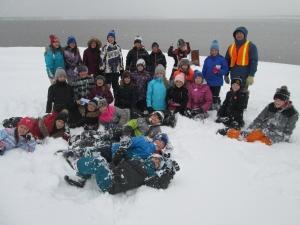
PCSDG welcomes Wanzor Beaubien who is working on the New Brunswick case study at ECHO under the supervision of Céline Surette and Julie Forgues from the Université de Moncton. His study aims to analyze the benefits and challenges of arts-based tools (eg Photovoice) in the emergence of actions and possible solutions to complex problems related to the impacts of natural resource development. Wanzor follows students from Blanche-Bourgeois School in Cocagne and Grande-Digue School who come to better understand the watershed concept. Through drawing, photography and walking in nature, he is able to understand the connections students make between their health and human activities on their watershed territory.
The ECHO Network is a 5-year research program funded by the Canadian Institutes of Health Research. The project brings together university researchers and research partners across Canada and around the world who have identified a need to better understand and address the impacts of resource development on health, the environment, and communities.
The research agenda is anchored in four regional cases, in jurisdictions currently facing the health impacts of resource extraction and development, and where the specific context provides a basis for addressing research objectives. The organizations involved with the New Brunswick Regional Case are the New Brunswick Environmental Network, the NB Children's Environmental Health Collective, the Université de Moncton and the Pays de Cocagne Sustainable Development Group.