Red Knot
Within our watershed, several salt marshes are present, where one can observe many bird species and even rare birds, such as the American Oystercatcher observed at the Cormierville marsh. The latter, like many other marshes around the world, is at risk of disappearing due to climate change and the phenomenon of coastal squeeze. A study on salt marshes in southeastern New Brunswick was carried out by the Université de Moncton. This database brings together a great deal of information on the location of marshes, the impacts of climate change, future projections, and more! The GDDPC has been conducting shorebird censuses at the Cormierville marsh since 2009. Many birdwatchers frequent this marsh and find a multitude of bird species there, including species at risk and rare birds, which highlights the importance of conserving this precious habitat.
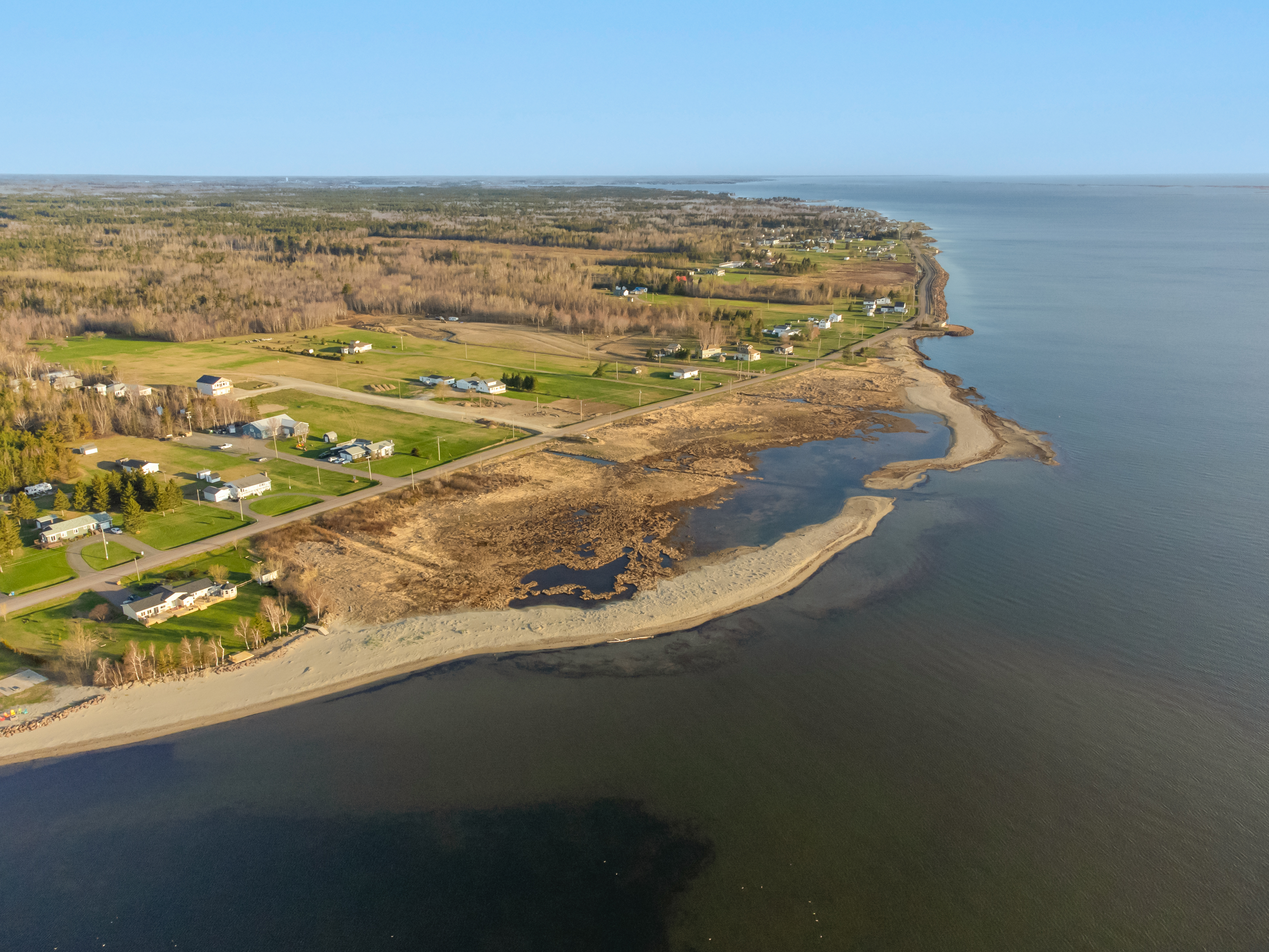
Cormierville marsh
During July and August, five groups from southeastern New Brunswick (GDDPC, Shediac Bay Watershed Association (SBWA), Vision H20, EOS-Energy [the watershed sub-group], and Petitcodiac Watershed Alliance [PWA]) took part in workshops [one in English, one in French] on freshwater and saltwater marshes. Each workshop was followed by local outings to several marshes. The report (2022) is available here (in French).
En 2024, nous avons effectué un inventaire à la marina de Cocagne, où il y a un marais salé présent. Nous avons effectué un inventaire d’oiseaux de rivage, de plantes, de libellules, d’amphibiens, de pollinisateurs et d’insectes.


Marsh at the Cocagne Marina Salt marsh copper (observed in 2024 at Cocagne)
The salt marshes of our watershed represent natural environments of great ecological value, both for biodiversity and for the protection of coastal areas. They provide essential habitats for many species, including shorebirds, species at risk, and rare species, while also playing a key role in improving water quality and combating climate change. However, these ecosystems remain fragile and are increasingly threatened by climate change and coastal squeeze. It is important to take action to help preserve salt marshes, such as respecting the vegetated buffer zone, not mowing the lawn too close to the marsh, encouraging the growth of native plant species adapted to the environment, and avoiding the use of ATVs near or within marshes.
Ressources
- Consolidated geospatial database (in French)
- Presentation on the importance of marshes (in French)- (2025) Biodiversity to Improve the Health of Our Ecosystems (in French)
Acknowledgements
The Pays de Cocagne Sustainable Development Group would like to thank the New Brunswick Wildlife Trust Fund, as well as watershed groups of southeastern New Brunswick for their time and the sharing of their knowledge in the field.