Let's take care of our land of plenty!

The Pays de Cocagne Sustainable Development Group's (GDDPC) mission is to engage citizen participation towards the sustainability of communities of Beausoleil, Maple Hills and Champdoré located in the Cocagne watershed.
Read more

Let's protect our wetlands!

Encourage and collect observations of plants, birds, mammals and all other forms of life in the Cocagne river watershed (Pays de Cocagne).
Read more

Let's count on ecology

Ecological planning deals primarily with restoring natural habitats and introducing native plants suitable for the area.
Read more

Community action

Citizens of Cocagne recognize the importance of community mitigation and adaptation measures in the face of climate change.
Read more

By taking care of the environment, we take care of ourselves

Developing activities and partnerships in the Cocagne watershed to promote an understanding of sustainable development respectful of nature, food, culture, economy and social justice.
Read more

Youth

The GDDPC has developed an environmental education program through outdoor learning for youth in Southeastern New Brunswick.
Read more

Let's take care of our land of plenty!

The Pays de Cocagne Sustainable Development Group's (GDDPC) mission is to engage citizen participation towards the sustainability of communities of Beausoleil, Maple Hills and Champdoré located in the Cocagne watershed.
Read more
IMG 3570

January 10, 2019

Grande-Digue - Citizens and resource persons met on December 4, 2018 at Notre Center de Grande-Digue to contribute to the development of public consultation for a climate change adaptation plan for the Cocagne watershed.

IMG 3584

Several citizens attended the consultative meeting, accompanied by representatives of various organizations, for example the LSD Advisory Committee of Grande-Digue, the rural community of Cocagne, the emergency planning committee of Cocagne, the Department of Geography from the Université de Moncton, as well as the natural resources and transportation departments of the Province of New Brunswick. The participants were grouped into small teams, which facilitated discussion and sharing. Using maps illustrating predictions of sea-level rise, participants identified several flood-prone locations and prioritized the most vulnerable locations. These include bridges, wharves and certain roads, as well as septic tanks, buildings and natural marshes.

Participants identified vulnerable people, such as seniors and newcomers. They discussed adaptation strategies, such as preserving the natural coastline, raising bridges, and improving water and food supply sites in an emergency. Finally, participants discussed communication strategies to better inform and engage the general public. The use of traditional media such as radio, newspapers and the community newsletter was mentioned. In order to reach young people, social media like Facebook and Twitter should be used.

The results of the consultative meeting will help guide the public consultation process that will follow in the spring of 2019. The development of a climate change adaptation plan for the Cocagne watershed is made possible through funding from the Trust Fund for environment of New Brunswick..

The PCSDG aims for a holistic and sustainable development of our territory and offers opportunities for citizens to manage their environment. The PCSDG acts as a catalyst for the sustainable development of our community. It puts together programs to improve the quality of the environment and the quality of life for the residents of the Cocagne River Watershed.

More information on the project here.
logo cocagne     Logo UdeMonctonCapture CSRKlogo FFE


Upcoming activities

Sunday Nov 1st, 2026 - GDDPC Annual meeting and concert of Sylvie Boulianne

from 2:00 p.m. to 4:00 p.m.

Notre-Dame Community Center, 3950 NB-115, Notre-Dame, NB, E4V 2J4 

You are invited to our Annual General Meeting (AGM) to celebrate the rich biodiversity and natural heritage of the Cocagne River and Bay watershed. We will present our various programs on food security, natural dyes and fibers, flora and fauna inventories, and water quality. We would love to hear your suggestions and comments for future activities. The annual meeting will be followed by a concert by Sylvie Boulianne accompanied by Caroline Savoie and Marie Andrée Gaudet. Snacks, tea, and coffee will be served, and the bar will be open. The meeting will be in French.


Read more

Latest News

The Cocagne Community Garden Is on a Roll

The Pays de Cocagne Sustainable Development Group (GDDPC) is a recipient of the AgriSpirit Fund for a renewable energy project at the Cocagne Community Garden and the winner of the Economic and Social Inclusion Award in the nonprofit sector.

Food Security So No Child Goes Hungry in Beausoleil

In collaboration with the Beausoleil Rural Community, the GDDPC received $25,000 from Farm Credit Canada (FCC) through the FCC AgriSpirit Fund to install renewable energy systems and modernize community garden infrastructure in order to extend food production and educational programs throughout the year.

Read more

Educational program

Action and education in Southeastern New-Brunswick
Educational program

Living shorelines

Natural protection of coastal and riparian lands
Living shorelines

Seeds for life

Directory of organic, non-GMO, heritage or heirloom seed suppliers
Seeds for life

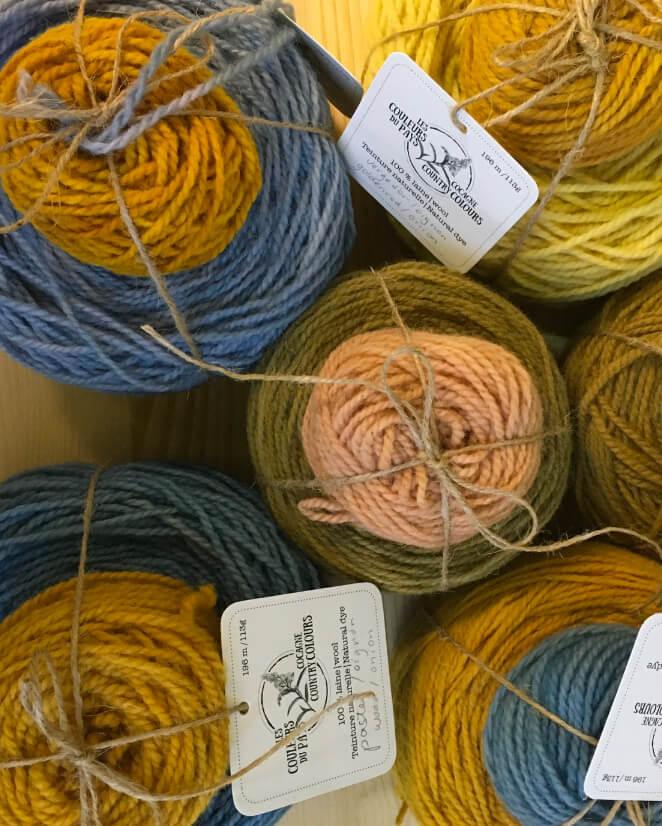
Cocagne Country Colors

Cultivate, responsibly harvest and transform natural dyes in the Cocagne watershed
Cocagne Country Colors

Tree swallow nest boxes

Tips for building and maintaining your own nest box
Tree swallow nest boxes

Natural burial

A question and answer guide to planning a natural funeral and burial.
Natural burial

What is the Pays de Cocagne Sustainable Development Group

In 2024, the Pays de Cocagne Sustainable Development Group (GDDPC) celebrates 25 years of community engagement. We celebrate the richness of biodiversity and abundance in Pays de Cocagne, where every individual action
contributes to a healthy environment in which people can thrive. Over the years, our community projects have cultivated values of self-sufficiency and ecological responsibility. Many volunteers are actively involved in the well-being of the region. Taking care of the environment means taking care of ourselves!

Subscribe to the newsletter

Subscribe to the newsletter to receive the latest

* indicates required

Take action

The key to community ownership of development is the participation of all its members. We want your input, your feedback and above all your participation!
Become a member  Make a donation